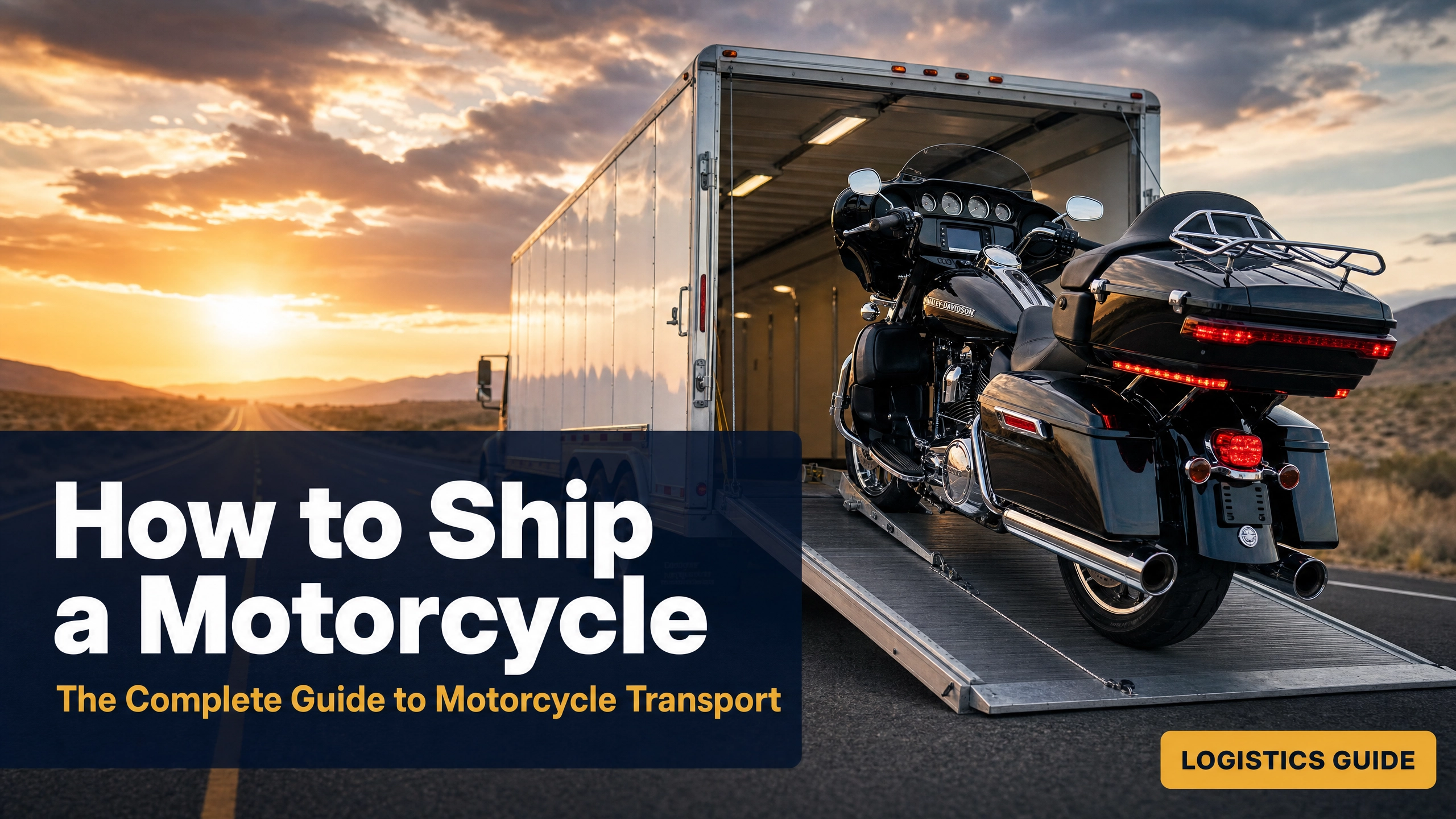
Shipping a motorcycle across the country — or even across the state — can feel complicated the first time. Between choosing the right transport type, preparing your bike, and making sure it arrives without a scratch, there are a lot of moving parts. This guide covers everything you need to know so you can ship your motorcycle with confidence.
What Is Motorcycle Transport?
Motorcycle transport — also called motorcycle shipping — is the process of hiring a professional carrier to move your motorcycle from one location to another. Rather than riding your bike to a new state or trailering it yourself, a motorcycle transport company handles all the logistics: pickup, loading, transit, and delivery.
Professional motorcycle shipping is used in a wide range of situations: relocating to a new city, purchasing a bike online from a private seller or dealership, attending a rally in another state, or simply avoiding the wear and tear of a long-distance ride.
Open vs. Enclosed Motorcycle Transport: Which Should You Choose?
The single most important decision when shipping a motorcycle is choosing between open and enclosed transport. Here is how they compare:
| Factor | Open Transport | Enclosed Transport |
|---|---|---|
| Cost | Lower ($300–$700) | Higher ($500–$1,200) |
| Weather Protection | Exposed to elements | Fully protected |
| Best For | Standard bikes, relocation | Vintage, custom, high-value bikes |
| Availability | More carriers, faster pickup | Fewer carriers, plan ahead |
| Visibility | Bike is visible in transit | Bike is hidden from view |
For most riders shipping a standard cruiser, touring bike, or sport bike, open transport is the practical and cost-effective choice. For Harley-Davidson touring bikes, vintage motorcycles, custom choppers, or any bike worth over $15,000, enclosed transport is strongly recommended. See our motorcycle transport services for both options.
How Much Does It Cost to Ship a Motorcycle?
Motorcycle shipping costs vary based on four primary factors: distance, transport type, motorcycle size, and time of year. Here are the typical ranges:
Additional factors that affect the final price include:
- Enclosed vs. open transport: Enclosed adds approximately $150–$300 to the base cost.
- Motorcycle size and weight: Larger touring bikes (Harley Ultra Limited, Honda Gold Wing) cost slightly more than smaller sport bikes.
- Non-running motorcycles: Bikes that cannot be ridden onto the trailer require special equipment and typically add $75–$150.
- Seasonal demand: Spring and summer are peak season; shipping in fall or winter can reduce costs by 10–20%.
- Route popularity: High-volume routes like LA to New York or Miami to Chicago are priced competitively due to carrier availability.
The best way to get an accurate price is to request a free instant quote. Our popular motorcycle transport routes page shows estimated costs for the most common routes.
How to Prepare Your Motorcycle for Shipping
Proper preparation protects your motorcycle and ensures a smooth pickup. Follow these steps before your carrier arrives:
What to Expect on Pickup and Delivery Day
Understanding the pickup and delivery process removes the guesswork and helps you plan accordingly.
Pickup: Your carrier will contact you 12–24 hours before arrival to confirm the pickup window. At pickup, the driver will inspect your motorcycle and note its condition on a Bill of Lading — a legal document that records the state of the bike at the time of loading. Review this document carefully and make sure any pre-existing damage is noted before signing.
Transit: For most routes, you will receive real-time tracking and can contact your carrier directly. Transit times range from 1–3 days for regional moves to 7–10 days for coast-to-coast transport.
Delivery: Your carrier will call ahead with a delivery window. At delivery, inspect your motorcycle thoroughly before signing the Bill of Lading. Check for any new damage that was not present at pickup. If you notice damage, note it on the Bill of Lading before signing and contact your transport company immediately.
Is My Motorcycle Insured During Transport?
Yes — all motorcycles transported by a licensed, FMCSA-registered carrier are covered by the carrier's cargo insurance during transit. However, there are important details to understand:
- Carrier insurance covers transport damage — damage caused by the carrier during loading, transit, or unloading.
- Personal items are not covered — helmets, gear, and accessories left on the bike are not covered by cargo insurance.
- Pre-existing damage is not covered — this is why documenting your bike's condition before pickup is essential.
- Acts of God (weather events, natural disasters) may be excluded — review the carrier's insurance terms if you are shipping during severe weather season.
Number 1 Auto Transport works exclusively with FMCSA-compliant, fully bonded carriers. Every motorcycle we ship is covered by comprehensive cargo insurance from the moment it is loaded until it is delivered. Learn more about our motorcycle transport services and insurance coverage.
How to Choose a Motorcycle Transport Company
Not all motorcycle transport companies are equal. Here is what to look for when evaluating carriers:
Verify the company is registered with the Federal Motor Carrier Safety Administration. Look up their USDOT number on the FMCSA website.
Check Google, Trustpilot, and the BBB for verified customer reviews. Look for consistent mentions of on-time delivery and good communication.
Avoid companies that quote low and add fees later. A reputable company provides a firm price with no hidden charges.
Door-to-door pickup and delivery is the most convenient option. Avoid companies that require you to drop off at a terminal.
You should be able to track your motorcycle during transit and have direct contact with your driver or dispatch team.
Motorcycles require different tie-down techniques than cars. Choose a company with specific experience transporting motorcycles, not just general auto transport.
Frequently Asked Questions About Motorcycle Shipping
Can I ship a non-running motorcycle?
Yes. Non-running motorcycles can be shipped, but they require special loading equipment. Inform your transport company at the time of booking so they can arrange the appropriate carrier.
How far in advance should I book motorcycle transport?
Booking 5–10 days in advance is ideal for most routes. For peak season (May–August) or enclosed transport, booking 2–3 weeks ahead is recommended to ensure carrier availability on your preferred dates.
Do I need to be present at pickup and delivery?
Someone must be present at both pickup and delivery to sign the Bill of Lading. This can be you, a family member, a neighbor, or any trusted adult — it does not have to be the registered owner.
What types of motorcycles can be shipped?
All types: Harley-Davidson touring bikes, sport bikes, cruisers, dirt bikes, adventure bikes, choppers, vintage and classic motorcycles, custom builds, ATVs, UTVs, and scooters. See our full list of motorcycle transport services.
What is the difference between a motorcycle transport broker and a carrier?
A broker (like Number 1 Auto Transport) arranges transport on your behalf by matching your shipment with vetted, licensed carriers from a nationwide network. A carrier is the company that physically moves the motorcycle. Working with a reputable broker gives you access to a larger carrier network, competitive pricing, and a single point of contact for your shipment.
Ready to Ship Your Motorcycle?
Number 1 Auto Transport has been shipping motorcycles nationwide for over a decade. With a Price Lock Guarantee, door-to-door service, fully insured carriers, and real-time tracking, we make motorcycle transport straightforward and stress-free.
Browse our popular motorcycle transport routes for estimated costs and transit times, read our customer reviews, or get a free instant quote to start your shipment today.
Get a Free Motorcycle Shipping Quote
Price Lock Guarantee — no hidden fees. Door-to-door service across all 50 states. Call or click to get your instant quote now.